Introduction
Commercial buildings require a dependable electrical distribution system to manage power safely across different loads. Compact Substations for Commercial Power Distribution In Egypt help integrate medium-voltage switching, voltage transformation, and low-voltage distribution within one coordinated installation. Understanding project requirements before selection helps buyers avoid capacity and compatibility issues.
How Compact Substations Manage Commercial Power Distribution
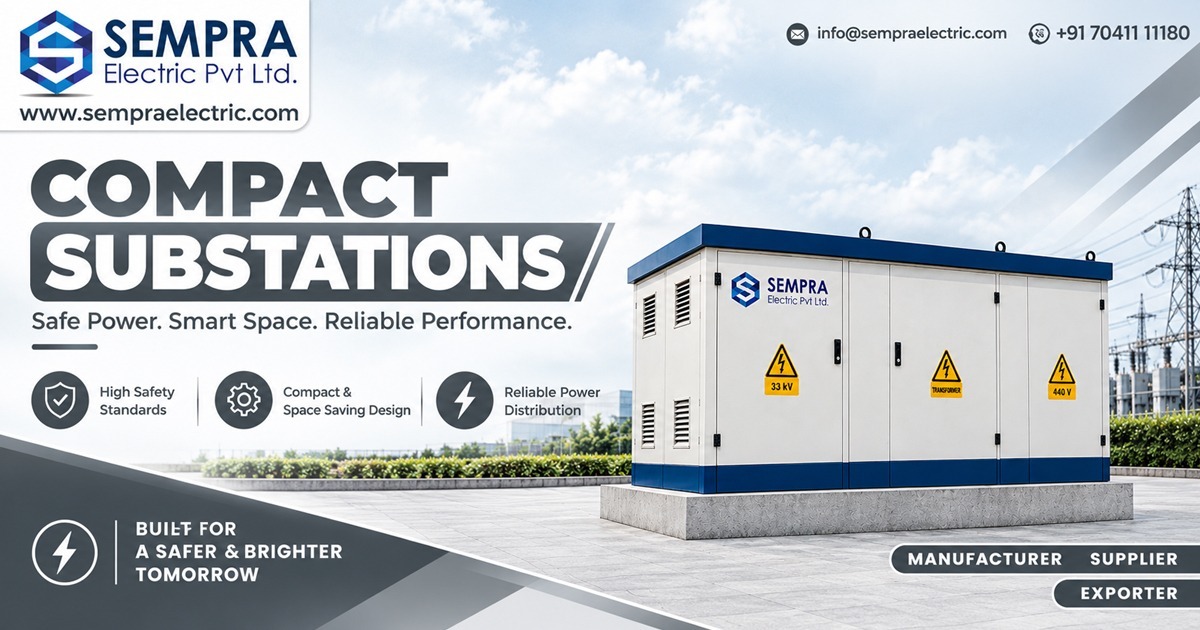
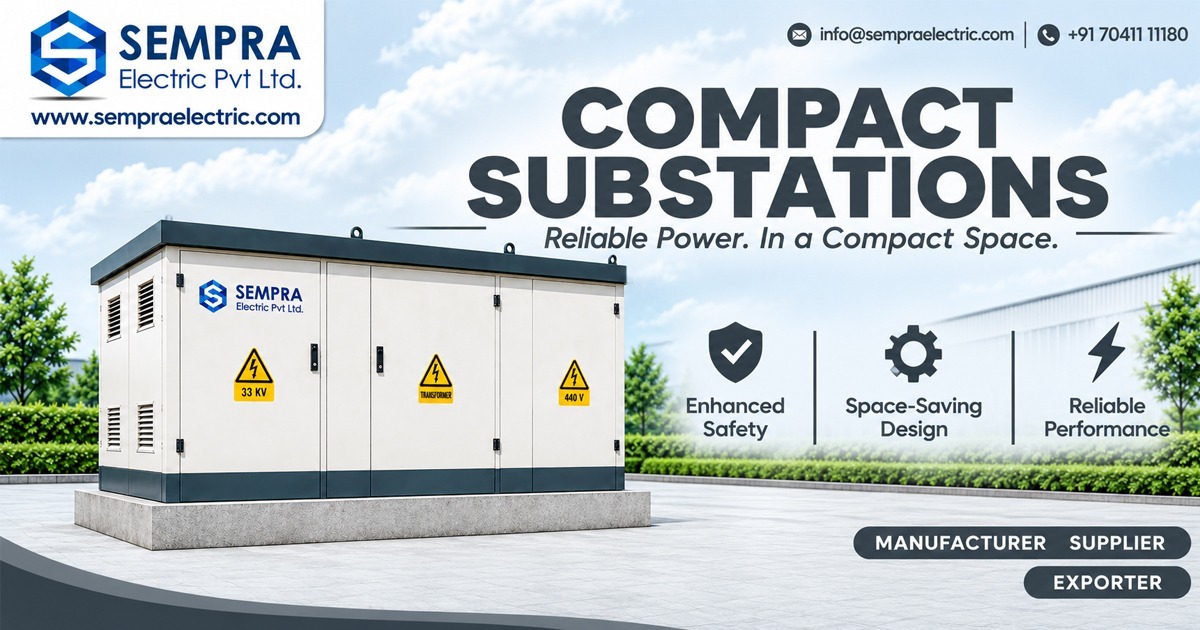
A compact substation combines major electrical components into a single integrated installation. Instead of arranging the transformer, medium-voltage switchgear, and low-voltage distribution equipment in separate locations, these components are brought together within a coordinated enclosure.
Its primary function is to receive medium-voltage electricity, reduce it to the required low-voltage level through a transformer, and distribute the power to different building circuits.
The main components generally include:
- Medium Voltage RMU: Controls incoming and outgoing medium-voltage connections and supports switching operations.
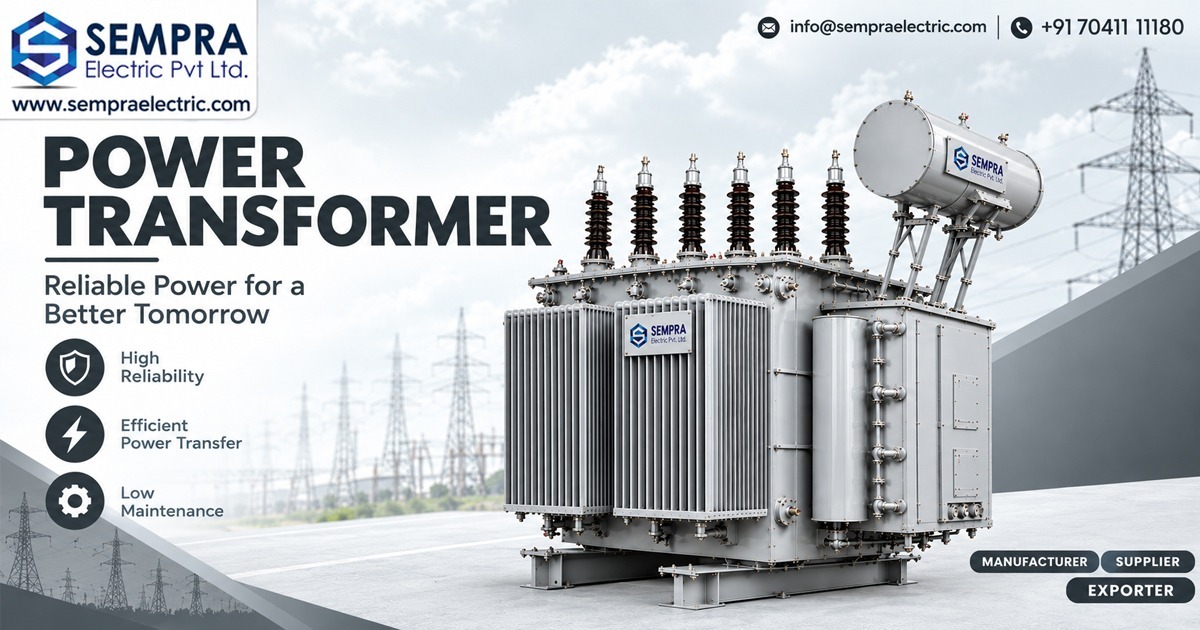
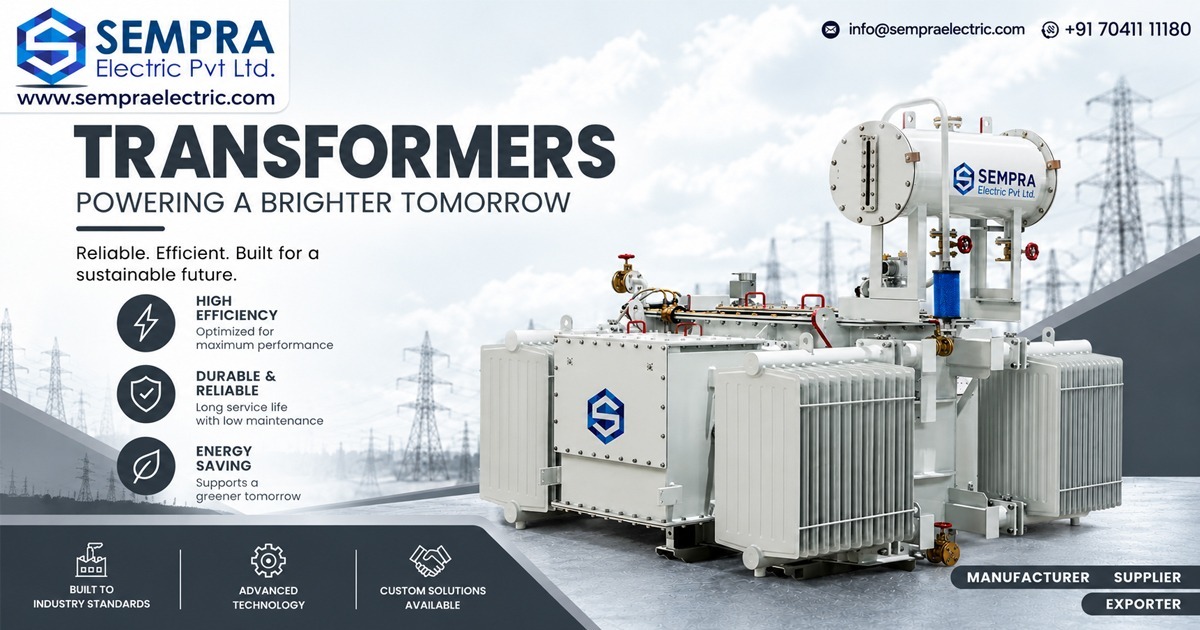
- Distribution Transformer: Converts incoming electrical voltage into a level suitable for commercial loads.
- Low Voltage Switchboard: Distributes electricity through outgoing feeders to different electrical systems.
- Protection and Metering: Supports electrical monitoring, fault protection, and energy measurement.
- Enclosure and Auxiliary Equipment: Houses the components and provides appropriate environmental and operational protection.
This integrated arrangement can be useful for shopping complexes, office buildings, hotels, commercial developments, and facilities where electrical equipment space needs careful planning.
Why Integrated Substation Planning Matters in Commercial Buildings
Commercial properties rarely have uniform electricity requirements. Air-conditioning systems, elevators, lighting, pumps, server rooms, and other equipment can create different load patterns throughout the day.
A properly planned substation should account for these operating conditions rather than relying only on the building’s connected load.
For example, a hypothetical commercial complex may experience higher electrical demand during business hours because of simultaneous air-conditioning, lighting, and elevator operation. The transformer capacity and LV feeder arrangement should therefore be evaluated against expected demand and future expansion.
Other important planning considerations include:
- Load distribution: Identify major electrical loads and their individual requirements.
- Space availability: Check the proposed installation area, equipment access, and cable entry arrangements.
- Operational continuity: Consider how switching and protection arrangements support electrical maintenance.
- Future expansion: Assess whether additional outgoing feeders or increased capacity may be required.
The objective is to develop a distribution arrangement that matches the building’s actual electrical operating profile.
Egyptian Project Standards and Environmental Requirements
When evaluating Compact Substations for Commercial Power Distribution In Egypt, buyers should pay particular attention to local distribution requirements and project approval procedures.
The Egyptian Electricity Holding Company (EEHC) has published specifications for prefabricated distribution kiosks and compact secondary substations.
Its EDMS 7-400-2 specification, dated 5 March 2024, addresses GRP distribution kiosks for prefabricated HV/LV substations up to 24 kV. It identifies IEC 62271-202 as the relevant standard for prefabricated substations.
Important technical considerations include:
- Applicable standards: Confirm the required IEC standards and the latest applicable EEHC distribution specifications.
- Voltage compatibility: Verify the incoming medium-voltage level and required transformer secondary voltage.
- Enclosure protection: Review IP and mechanical impact protection requirements according to the installation environment.
- Climate conditions: Consider ambient temperature, dust exposure, ventilation, and humidity.
- Electrical protection: Confirm short-circuit withstand ratings, earthing arrangements, and protection coordination.
What Buyers Should Confirm Before Approving a Substation
Before purchasing Compact Substations for Commercial Power Distribution In Egypt, procurement teams and electrical consultants should review the following details:
1. Transformer Capacity: Calculate the present maximum demand and consider reasonable future load growth before finalizing the kVA or MVA rating.
2. Incoming Voltage: Confirm whether the project requires an 11 kV, 22 kV, or another medium-voltage arrangement based on the local distribution network.
3. RMU and Protection Configuration: Check incoming and outgoing feeder arrangements, circuit-breaker requirements, fault levels, and protection coordination.
4. Installation Dimensions: Review the available footprint, foundation or concrete plinth, cable trench positions, lifting arrangements, and maintenance access.
5. Environmental Protection: Specify suitable enclosure protection, ventilation, corrosion resistance, and operating temperature according to the actual site conditions.
6. Testing and Documentation: Request applicable type-test reports, routine-test records, equipment datasheets, wiring diagrams, and approved technical drawings.
One important purchasing consideration is that transformer capacity alone does not determine whether a substation is suitable. The RMU arrangement, LV switchboard rating, short-circuit withstand capability, and outgoing feeder requirements must also match the electrical design.
Sempra Electric’s Compact Substation Manufacturing Support from Ahmedabad
Sempra Electric Pvt. Ltd. provides compact substations, transformers, and electrical distribution equipment for industrial and infrastructure requirements.
Its published compact substation product information includes:
- Outdoor enclosure with IP55 protection.
- Medium-voltage RMU with 1+2 configuration.
- Transformer rating of 2,000 kVA with 33/415 V configuration.
- LV incomer with 2,500 A ACB.
- Outgoing LV feeders with energy meters.
- Provision for an auxiliary DC system.
These are published configuration details, not universal specifications for every project. The final arrangement should be confirmed against the customer’s electrical drawings and Egyptian project requirements.
The company’s transformer information also identifies packaged compact substations up to 10 MVA in the 33 kV class. This provides relevant manufacturing context for buyers evaluating integrated power distribution equipment.
With manufacturing support based in Ahmedabad, Gujarat, India, Sempra Electric can be approached to discuss project requirements, equipment configuration, transformer selection, and technical documentation.
Website: sempraelectric.com
Compact substation enquiries: View Compact Substations.
Supporting Commercial and Industrial Developments Across Egypt
Egypt has commercial developments, industrial zones, logistics facilities, and infrastructure projects that require appropriately planned electrical distribution systems.
Compact substations can be considered for commercial buildings, business parks, warehouses, hotels, shopping centres, and other facilities where medium-voltage supply needs to be converted and distributed locally.
Relevant business and industrial locations include:
Cairo, Giza, Alexandria, 10th of Ramadan City, 6th of October City, New Cairo, Sheikh Zayed City, Obour City, Badr City, Sadat City, Borg El Arab, Damietta, Port Said, Suez, Ismailia, Mansoura, Tanta, Zagazig, Benha, Assiut, Sohag, Qena, Luxor, Aswan, Hurghada.
For buyers in these regions, the selection process should consider local electricity distribution requirements, site conditions, building demand, and applicable project approvals. Sempra Electric’s manufacturing support from Ahmedabad, Gujarat, India, can be discussed for projects sourcing electrical equipment from India.
Frequently Asked Questions
1. What is the main purpose of a compact substation in a commercial building?
It receives medium-voltage electricity, transforms it into a usable low-voltage supply, and distributes power to building circuits through integrated switching and distribution equipment.
2. How is the transformer capacity decided for a commercial project?
Capacity depends on calculated maximum demand, load diversity, power factor, expected expansion, and operating conditions. An electrical consultant should assess these factors before selecting the transformer.
3. Which standards should buyers check for compact substations in Egypt?
Buyers should review the applicable EEHC distribution specifications and IEC 62271-202 requirements, along with relevant transformer, enclosure protection, and switchgear standards.
4. Can Sempra Electric supply compact substations for Egyptian projects?
Sempra Electric Pvt. Ltd. provides compact substation manufacturing support from Ahmedabad, India. Buyers can contact the company to discuss project specifications, configuration requirements, and export-related arrangements.
Conclusion
Selecting a suitable commercial power distribution system requires more than comparing transformer ratings. Buyers should evaluate electrical loads, medium-voltage compatibility, protection arrangements, enclosure requirements, and local approval conditions together. Sempra Electric Pvt. Ltd. offers manufacturing support from Ahmedabad, Gujarat, India, for compact substation requirements. Contact the company to discuss your Egyptian project’s technical specifications and equipment requirements.
Contact Us:
+91 70411 11180
Email Id:
semprasales@gmail.com
sempraelectric@gmail.com